 ← All articles
People keep asking me how I use AI ethically. I ask it of myself just as often.
When it comes from someone else, it is rarely a neutral question. By the time it reaches me, the person has usually already picked a side. AI is the thing that ends us, or the thing that saves us. They want to know which camp I am in. I am in neither, and that turns out to be the harder thing to explain.
When I ask it of myself, there is no side to pick and nobody to explain it to. There is only what I did with it yesterday, and what I am about to do with it today. The technology keeps moving, and so do the companies behind it. At my best, I am keeping up with enough of it to make the next call with my eyes open.
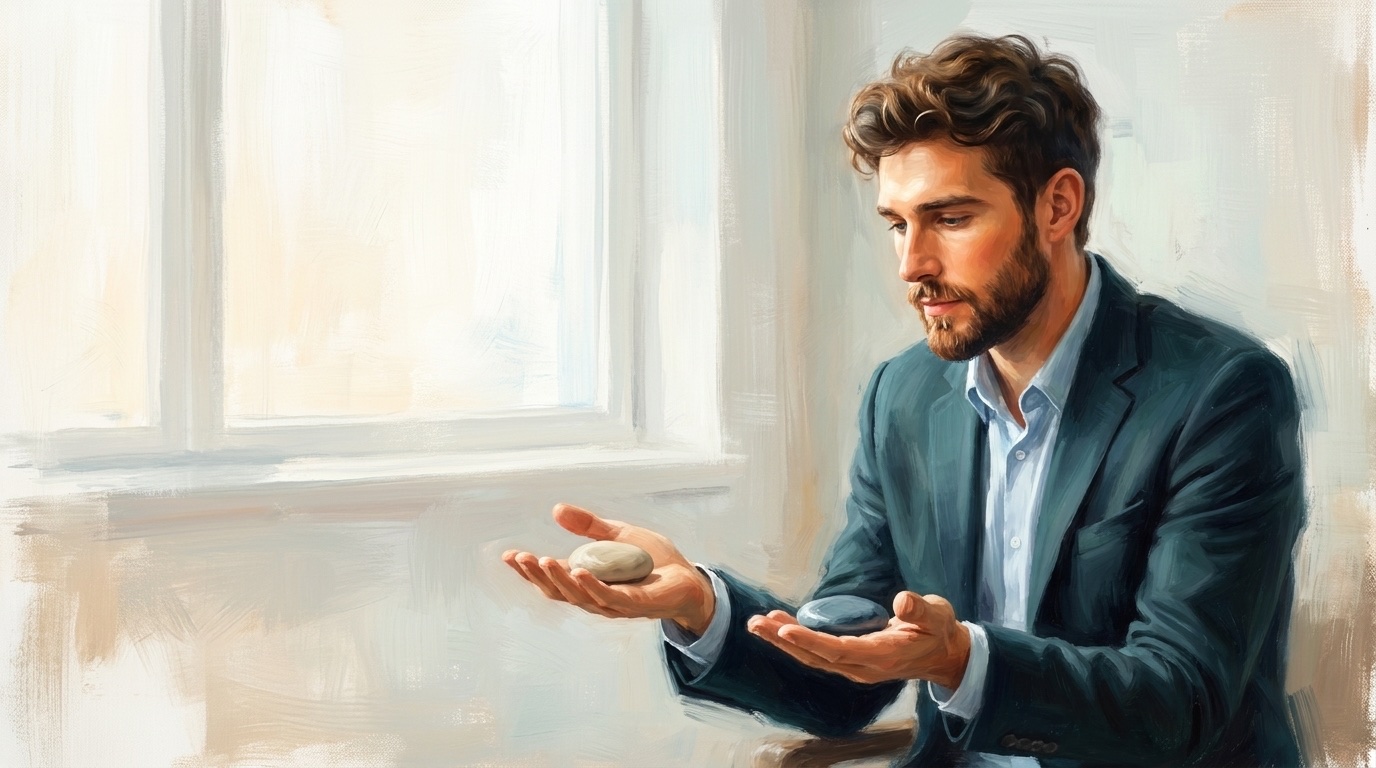
The answer, of course, is somewhere in the middle. Most people agree the moment you say it, which is what makes it the least useful sentence in the conversation. The middle is not a place you can stand. It is a decision you have to keep making.
And it is not abstract. AI is here, and it is already changing how the work gets done. Ignoring that does not slow it down. It only means the change happens to you, instead of with you. So the question stays small and personal. Given that this is happening, how do I, one person, decide what to do with it, without either looking away or swallowing whatever I am handed?
My own answer is not to step away from it, and not to chase every advantage it can give me. It is to use it deliberately, in the work I already do, for the people I already serve. I cannot hand you a framework, only what that looks like in practice, in two parts.
What I build, and what I build it with
The first is the product. I run a platform called BeWell Catalyst® that takes a practitioner's wellbeing programme and puts it on a phone. I have written about why it exists, so I will not repeat it here. The part that belongs in this conversation is that I would not have built it at all without AI. A couple of years ago, starting a product business as one person was not something I would have considered. The barrier came down far enough that I could step over it, so I did, and I built it for the contemplative community I am part of.
Building with AI means choosing which AI to build on, and that choice is not only technical. I weigh two things most: the conduct of the people running the company, and how seriously they treat safety and governance. I mostly use Claude and Gemini. I dabble in Mistral and in local models that run on my own machine. There are providers I have decided to stay away from, and the reason is rarely capability. It is who is running them, and how they behave.
Most people never look. A good friend of mine, someone I would call genuinely ethical, told me recently that she had been switching between ChatGPT and Grok and preferred the feel of one over the other. She had never thought to ask who was behind either, or what that might mean. I do not think she is unusual. The choice of which AI to use is in front of all of us, many times a day, and most of us make it on style and convenience without once looking at who we are handing our trust to.
There is a larger reason this matters. If we all come to depend on AI, and that AI comes from a handful of companies in a single country, the dependence itself becomes a risk, for the wider economy and for everyone relying on it. You do not have to solve that to take it seriously. When you next assess a supplier, ask them which AI they build on, and why they chose it. Most will not have a ready answer, and that tells you something too. I am not going to hand you a list of who is good and who is bad. I am saying that what you choose to build on, and what you choose to reach for, is already an ethical decision, whether you treat it as one or not.
What I say when people ask
The second is what I do when people ask. I am not running a formal programme on this. It happens in conversations, often the same ones that start with the question I opened on. Someone wants to know whether they should be using AI, or how, or whether it is safe to. They usually want me to settle it for them. Tell them it is fine, or tell them to stay away.
I try to do neither. The more useful thing is to help someone see what the technology actually means for their own work, and then leave the decision with them. The risk is real, and so is the possibility. Recently, a community I belong to in the mindfulness world needed a website, and there was no budget to pay anyone to build one. We could wait, or we could ask AI to build it. A few hours from someone who had never built a website, and it existed. That is the upside in plain terms: things that used to need a budget and a specialist are now cheap and quick. When someone asks me, my job is not to sell them that upside or frighten them with the downside. It is to help them look clearly at both and make their own call. Nobody else can make it for them.
Neither camp
There is a steadier way to hold all of this, and it is the one piece of mindfulness I will put on the page. Accept the situation as it actually is first, and then act to change it. Not resignation, and not the constant high of chasing the next announcement. Both of those are exhausting, and neither leaves you able to make a good decision. The ground to stand on is the plain fact that this is happening, and that you still get to choose what you do with it.
So when someone asks me how I use AI ethically, or when I reflect on it myself, this is the answer. I do not have a rule that settles it. I have a set of choices I keep making, in the open, about what I build, what I build it with, and what I tell the people who ask. The technology has no ethics of its own. We supply those, one decision at a time. The first of those decisions is the one almost nobody makes on purpose: to look at who is behind the tool in your hand before you reach for it again.